
If you work in veterinary medicine or the animal sciences, you already know the hard part is the research itself — the fieldwork, the herd visits, the laboratory analysis, the months of follow-up. Submitting the finished paper should not be another obstacle. This guide walks you through submitting to the Global Journal of Veterinary and Animal Sciences (GJVAS), the open access journal published by Global Academic Publishers: what the journal covers, how to prepare your manuscript, how to submit, what happens during double-blind peer review, and what it costs during the journal's launch phase.
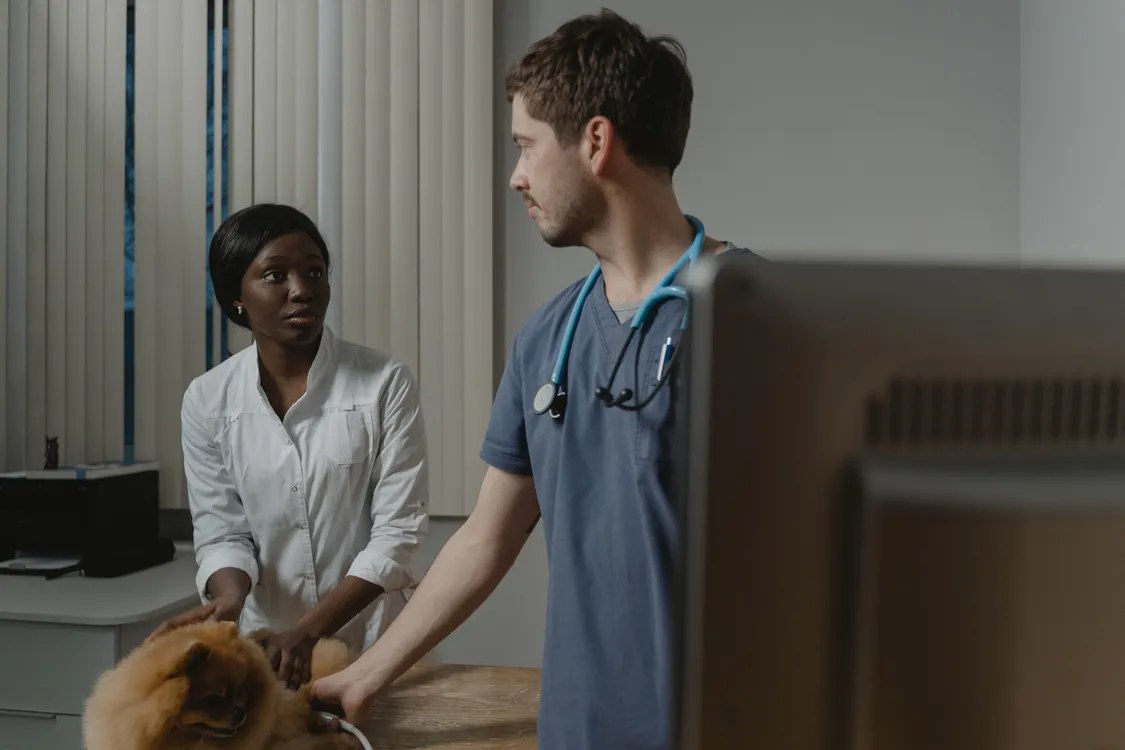
GJVAS is a peer-reviewed, open access journal dedicated to veterinary medicine and the animal sciences. Every published article is free for anyone to read and is distributed under a CC BY 4.0 licence, which means readers can share and reuse your work with proper credit to you. All submissions go through double-blind peer review: reviewers do not know who the authors are, and authors do not know who the reviewers are.
The journal's scope covers animal health, animal production, animal welfare, reproduction, infectious diseases, veterinary public health, and One Health — the connected health of animals, people, and the environment. In practice, that spans clinical studies in companion and farm animals, livestock and poultry production research, disease surveillance and control, reproductive science, welfare assessment, and work on zoonotic diseases and food safety that sits within the veterinary and animal science remit. If your study answers a question that veterinarians, animal scientists, or livestock professionals would recognise as theirs, it is likely within scope. You can confirm the current scope on the journals page and the GJVAS journal website. GJVAS is a new journal in its launch phase; its ISSN is in application and Crossref DOI registration is planned, and the journal states both openly on its listing.
GJVAS is written for the people who do this work: academic researchers and postgraduate scholars in veterinary and animal science faculties, practising veterinarians with clinical cases or field data worth reporting, researchers in livestock, poultry, and allied production systems, and scientists working on animal disease, public health, and One Health questions. First-time authors and early-career researchers are welcome — manuscripts are judged on scope, originality, sound method, and ethics, not on the seniority of the author list. If you are unsure whether your topic fits, compare it against the scope above and the journal's own pages before you write to the editorial office; a two-line scope question is always cheaper than a full submission to the wrong journal.
GJVAS publishes original research articles, review articles, case reports, short communications, editorials, and letters. Original research articles present complete studies with full methods and data. Review articles synthesise a defined topic critically rather than merely listing prior work. Case reports describe instructive clinical cases — a single unusual presentation or a small series — with a clear lesson for practice. Short communications report focused findings, preliminary results, or a single well-supported observation that does not need a full-length paper. Choose the type honestly at submission: reviewers assess the manuscript against the standard for that type, and a short communication judged as a short communication fares better than the same text stretched into a thin full article.
Build the paper in the order reviewers read it. The title should state the species, the intervention or exposure, and the outcome where possible. The abstract must stand alone: the question, the study design and animals involved, the main result with numbers, and the conclusion. The introduction should end with a specific objective or hypothesis. Methods need enough detail for another competent team to repeat the study — animal numbers and how they were determined, breed, age, sex, housing and feeding where relevant, inclusion and exclusion criteria, randomisation and blinding where used, and the statistical methods with the software named. Present results in the same order as the methods, keep interpretation for the discussion, and state your limitations plainly; reviewers trust authors who name their own weaknesses. Follow the detailed guidelines for preparing manuscripts in animal sciences and the journal's formatting and reference guidance before you submit, not after a technical check sends the file back.
Two preparation points are specific to animal research and are checked early. First, ethics approval: any study involving live animals must have approval from your institution's animal care and use or ethics committee, and the manuscript should name the approving body and give the approval number where one was issued. Work done under routine clinical care or on client-owned animals should state the consent and welfare arrangements. A missing ethics statement is one of the fastest routes to a returned manuscript. Second, reporting standards: widely used reporting guidelines for animal research, such as the ARRIVE guidelines for in vivo studies, exist to make sure design, sample size, and analysis are described completely. Working through the relevant checklist while you write costs an hour and answers most methodological questions a reviewer would otherwise raise.
Submission runs through the journal's own route. Start from the journals page or the GJVAS journal website and follow its Submit link — the journal's submission page is also reachable from the publisher's manuscript submission page. Before you begin, have ready: the anonymised manuscript file (no author names, affiliations, or identifying acknowledgements, because review is double-blind), a separate title page or the author details the form requests, your abstract and keywords, and your ethics approval details. Then work through the submission in order: select the article type, enter author names and affiliations in the order agreed by all authors, upload the files, add funding information and any conflict-of-interest declaration, and confirm the licence and originality statements. Keep the submission confirmation and any manuscript reference number you receive — quote it in every later message to the editorial office.
First comes an editorial check: scope, completeness, ethics statements, formatting, and originality screening. Manuscripts that fail on scope or completeness are returned at this stage, usually with a short explanation. Those that pass are sent to independent reviewers under the double-blind model, and the handling editor bases the decision on their reports. The realistic pattern, at GJVAS as at comparable journals, is that an initial editorial check typically takes days to a few weeks and external review several weeks more, so a first decision in the range of roughly one to three months is a reasonable expectation — individual manuscripts vary, and a missing file or slow revision from the author's side adds more time than the review itself. Most first decisions are revision requests rather than outright acceptance or rejection. Reply to every reviewer comment point by point, as our guide to double-blind peer review explains, and return the revision promptly; a clear, verifiable response letter is the single biggest factor in how quickly a revised paper moves. No journal can promise acceptance, and GJVAS does not — the decision rests on the reviewers' assessment of the work.
GJVAS is open access, so publishing carries an Article Processing Charge (APC) that covers peer review administration, production, and open access hosting. During the journal's launch phase, an inaugural waiver applies — the journal's listing states the waiver plainly, so authors submitting in the launch period should confirm the current position on the journal page at the time they submit. After the launch phase, the standard APC applies; confirm the current fee on the journal page before you submit. Charges are stated before submission, and an editorial decision never depends on purchasing extra services. Our explainer on APC waivers in open access journals describes how waivers generally work across publishers.
Nothing here guarantees acceptance, but the same factors recur in successful submissions. Fit the scope precisely and say in your cover note why the work belongs in a veterinary and animal science journal. Make the methods reproducible — animal numbers, selection criteria, and statistics fully described. Include the ethics approval statement and follow the reporting checklist for your study type. Write the abstract last and make it quantitative. Format the manuscript and references as the journal asks, and anonymise the file correctly for double-blind review. Finally, treat revision as part of the process: answer every comment, change what should be changed, and explain respectfully, with evidence, where you disagree.
Choosing an article type is a decision about what your evidence can actually support, not about how long you would like the paper to be. An original research article needs a complete question, a described method, and results that are analysed rather than merely listed. If your data answer only one narrow question, or if the work is an early stage of a larger project, a short communication may be the honest fit: it lets you report a single well-supported finding quickly, without padding it with background and discussion that the data cannot carry. A review article, by contrast, is judged on synthesis. It should explain how studies were selected, what they agree and disagree on, where the gaps are, and what should be done next. A review that only summarises one paper after another, without comparing methods, populations, or findings, will usually be returned for reworking.
Case reports deserve a similar honesty check. A case is worth reporting when it changes how a clinician would think or act: an unusual presentation, an unexpected response to treatment, a diagnostic pitfall, or a first observation in a particular species or setting that has practical implications. The report should give the history, examination findings, diagnostic work-up, treatment, outcome, and follow-up in enough detail for a reader to judge whether the same approach would work in their own practice. A case without a clear lesson, or without follow-up, reads as an anecdote rather than a contribution. Editorials and letters are shorter and more opinionated by design, but they still need a clear argument and, where they make factual claims, support for those claims. When you are torn between two types, pick the one whose standard your manuscript already meets, and say so in your cover note; editors would rather receive a strong short communication than a thin full article.
The title is the first filter a reader and an editor apply. State the species or animal group, the condition, intervention, or exposure, and the study design where it helps, for example a prevalence survey, a clinical trial, or a diagnostic evaluation. Avoid titles that promise more than the study delivers, such as claiming a treatment is effective when the study only measured a short-term marker. A good test is whether a veterinarian searching for your topic would find your title and immediately know whether the paper is relevant to their patients or herds.
The abstract should be written last, even though it is read first. It needs the question, the design, the animals and setting, the main result expressed with numbers, and the conclusion — and nothing else. Vague abstracts that say a treatment "showed good results" without giving the outcome measured, the group sizes, or the direction and size of the effect force reviewers to hunt through the full text for the answer, and they often conclude that the answer is not there. Keep the abstract consistent with the body of the paper: every number in the abstract should appear, with the same value, in the results.
The introduction should move from the general problem to the specific gap in three or four moves: why the condition or production problem matters, what is already known, what remains unknown or unresolved, and therefore what this study set out to do. End with a stated objective or hypothesis, not with a general statement of intent. Methods are where veterinary manuscripts most often lose reviewers. Give the animal population in full: species, breed or type, age, sex, source, and numbers at each stage, including how many animals were enrolled, how many completed the study, and how many were excluded and why. Describe housing, feeding, and management where they could affect the outcome, and give drug names, doses, routes, and durations rather than brand names alone. For diagnostic studies, describe the reference standard and how samples were collected, stored, and tested. For field studies, describe the farms, flocks, or clinics, how they were selected, and what season or period the work covered, because disease patterns and production conditions vary with both.
Statistics deserve the same precision. Name the tests used, the unit of analysis, and the software, and explain why the chosen test fits the data. In herd and flock studies this matters in particular: animals within the same farm or flock are not fully independent observations, so the analysis should reflect that clustering where it applies, and the paper should say how it was handled. Report effect sizes with an appropriate measure of uncertainty rather than p-values alone, and do not claim a difference that the analysis did not support. Results should follow the order of the methods, with tables and figures that can be understood without the text: a clear title, labelled rows and columns, units, and footnotes explaining abbreviations. The discussion should then interpret the findings, compare them with earlier work, explain disagreements honestly, and state the limitations plainly — including the limits of a small sample, a single site, or a short follow-up period. A limitations paragraph that anticipates the reviewer's objections is a strength, not a weakness.
Tables and figures should each carry one message. A table that tries to show everything from a study usually shows nothing clearly. Put the main comparison in the table, move secondary detail to the text or to supplementary material where the journal allows it, and check that every number in a table matches the text and the abstract. Figures need the same care: axes labelled with units, legends that explain symbols and abbreviations, and images of sufficient resolution that labels remain legible when printed or viewed on a small screen. Clinical photographs should be relevant, properly consented where they identify an owner or a distinctive animal, and free of identifying information that is not needed for the clinical point.
References should be complete, accurate, and current enough to show the state of the field, and every reference in the list should be cited in the text and vice versa. Check author names, years, journal titles, and volume and page details against the original sources rather than copying them from another paper's reference list, where errors propagate. Follow the journal's formatting and reference guidance for the order, punctuation, and style of the list, and apply it consistently; a reference list that mixes styles signals that the manuscript was not checked before submission. Where a source is a preprint, a thesis, or a conference paper rather than a peer-reviewed article, cite it as such and do not present it as peer-reviewed evidence.
Double-blind review only works if the manuscript file itself gives nothing away, so anonymisation needs a deliberate pass, not just the removal of the title page. Remove author names, affiliations, and acknowledgements from the manuscript file, and check headers, footers, and file properties for names as well. Remove or reword acknowledgements that would identify a funder, institution, or collaborator, and move them to the separate author information the submission form requests, so they can be restored at publication. Be careful with self-citations: a sentence such as "in our earlier study at this clinic" identifies the authors even without a name. Reword such passages in the third person and, where a self-citation is essential to the argument, cite it without drawing attention to authorship.
The same caution applies to place names, clinic names, and distinctive local details when they would identify the authors' institution, and to ethics statements that name a specific committee in a way that points to one institution. Where the journal's submission route asks for ethics details separately, give the full statement there and use a neutral form in the manuscript, restoring the full wording after acceptance. Check supplementary files and figure files for the same leaks: a photograph with a clinic sign in the background, a spreadsheet with an author's name in a tab, or a dataset filename containing an institution can undo an otherwise careful anonymisation. A final read-through specifically looking for identifiers, done by a co-author who did not write the draft, catches most of these.
Agree the author list before submission, not during revision. Authorship should reflect a real contribution to the work — to its conception or design, to data collection or analysis, or to drafting and revising the manuscript — combined with approval of the final version and accountability for the work. People who helped in other ways, such as providing routine technical support, access to animals, or general supervision without a direct intellectual contribution, are normally thanked in the acknowledgements rather than listed as authors. Adding a senior name as a courtesy, or omitting a junior contributor who did the work, creates problems that are difficult to repair once review is under way, and journals rightly treat authorship disputes seriously.
The corresponding author carries the practical responsibility for the submission: confirming that all authors have approved the manuscript and the author order, supplying funding and conflict-of-interest information, responding to editorial queries, circulating reviewer comments and proofs to all co-authors, and keeping a record of approvals. Changes to the author list after submission should be explained to the editor with the agreement of all authors, including anyone being added or removed, and should not be made silently in a revised file. If a co-author leaves an institution or changes email address during review, tell the editorial office promptly so that proofs and decisions do not go astray.
Ethics approval is the starting point, not the whole of the ethical picture. The manuscript should also describe how animal welfare was protected during the study: housing and handling, pain management and humane endpoints where relevant, and what happened to the animals at the end of the study. Field studies on farms and in clinics should state how owner consent was obtained and how client-owned animals were treated, including whether treatment decisions were affected by participation in the study. Studies involving wildlife, free-ranging animals, or protected species should note any permits or permissions required, and studies using biological samples should say how samples were collected, stored, and disposed of, and whether any biosafety measures applied.
Conflicts of interest should be declared plainly, even when the author believes they did not influence the work. Funding from a feed, pharmaceutical, or equipment company, provision of products or animals, consultancy, or employment by a company whose product is studied are all relevant, as are personal relationships that a reader might reasonably think could affect judgement. A declaration does not disqualify a paper; an undisclosed conflict discovered later damages trust in the paper and in the authors. The same principle applies to data: state whether data are available, where they can be requested, and any restrictions, such as owner confidentiality or commercial sensitivity, that limit sharing. If data cannot be shared, say why rather than leaving the question unanswered.
Consider an illustrative example, not a real study: a team surveys mastitis on dairy farms in one district, comparing farms that use one milking routine with farms that use another. The weak way to frame this is a title promising a comparison of routines, an abstract that reports only that one routine looked better, and a methods section that omits how farms were chosen and how many animals were sampled on each farm. A reviewer cannot judge such a paper, because the design and the denominator are missing.
The stronger framing starts with a precise question: whether the outcome of interest differs between the two routines in the farms studied, over a stated period. The methods then give the number of farms and animals, how farms were selected, how animals were sampled, how the outcome was defined and measured, and how farm-level clustering was handled in the analysis. The results report the outcome for each group with the numbers behind it, the discussion compares the finding with earlier work, and the limitations state plainly that the study covered one district and one season, so the findings may not generalise to other systems. Nothing in this example requires unusual data or an exceptional result; it requires completeness. That is the standard most GJVAS submissions should aim for: a question a practitioner recognises, a method another team could repeat, and a conclusion that stays within what the data show.
Work through this checklist in order, and do not submit until every item is answered. First, scope: does the paper belong in a veterinary and animal science journal, and have you checked the current scope on the journal's pages? Second, completeness: does the abstract stand alone with numbers, do the methods allow repetition, and do the results follow the methods in order? Third, ethics: is the approval statement present, with the approving body and approval number where issued, and are consent and welfare arrangements described? Fourth, anonymisation: have author names, affiliations, acknowledgements, and identifying details been removed from the manuscript and all files? Fifth, authorship: have all authors approved the manuscript, the author order, and the declarations?
Sixth, files: is the manuscript in the format the journal asks for, are tables and figures complete and legible, and are references formatted consistently and checked against their sources? Seventh, declarations: are funding, conflicts of interest, and data availability stated? Eighth, originality: is the work original, has it not been submitted elsewhere at the same time, and has any overlapping prior publication been disclosed to the editor? Ninth, cover note: does it state the article type, why the work fits GJVAS, and anything the editor needs to know, such as a prior presentation or a related manuscript under consideration elsewhere? A submission that passes this checklist still faces peer review on its merits, but it will not be returned for a preventable technical reason, and that alone saves weeks.
After the editorial check, a manuscript that passes is sent to independent reviewers who do not know the authors' identities. Reviewers are asked to judge scope, originality, method, analysis, interpretation, clarity, and ethics, and to recommend a decision. The handling editor weighs those reports, which may disagree, and issues a decision. Desk rejection, before external review, usually follows from a scope mismatch, a missing ethics statement, an incomplete manuscript, or a fundamental methodological problem that review cannot fix. It is not a judgement on the authors, and a short explanation normally accompanies it; if the explanation points to a fixable problem, the work can often be revised and submitted again as a new submission, where the journal allows it.
Most first decisions on manuscripts that reach review are requests for revision. A minor revision asks for clarifications, corrections, or small additions, and can usually be completed quickly. A major revision asks for substantial reworking: additional analysis, a rewritten section, a clearer limitations discussion, or a re-examination of the interpretation. A major revision is not a rejection; it means the reviewers see a publishable paper underneath the current version. Read every comment before changing anything, and separate comments that require a change from comments you disagree with. For each comment, state what you changed and where, quoting the new wording or giving the page and section, so the editor and reviewers can verify the change without re-reading the whole paper. Where you disagree, explain respectfully and with evidence — a reference, a re-analysis, or a reasoned argument — rather than dismissing the point. Never ignore a comment silently, and never claim a change was made when it was not; reviewers check, and a response letter that cannot be verified damages credibility more than an honest disagreement.
Allow time for a careful revision rather than rushing a superficial one. Circulate the revised manuscript and the response letter to all co-authors before resubmission, check that every change promised in the letter actually appears in the manuscript, and re-run the anonymisation check, because revised files often reintroduce author names in tracked changes or comments. If a reviewer asks for an analysis you cannot perform, say so and explain what you did instead, and what limitation that leaves. Editors understand constraints on data and resources; they do not accept silence about them.
The most common preventable returns are easy to list because they recur across journals. A manuscript outside the journal's scope wastes everyone's time and is the easiest to avoid by checking the scope first. A missing or vague ethics statement stops assessment of any animal study. An abstract without numbers, a methods section without animal numbers or statistical detail, and results that do not match the methods all signal that the paper was submitted before it was finished. Poor anonymisation, inconsistent references, and figures that cannot be read are technical returns that a final check would have caught. Finally, simultaneous submission to another journal, or substantial overlap with an already published paper that was not disclosed, is a serious matter: do not submit the same work to two journals at once, and disclose any related publication, preprint, or conference presentation to the editor so the question of overlap can be judged openly. If you are unsure whether a prior output counts as overlap, ask the editorial office before submitting rather than after.
Acceptance is followed by production: copyediting, typesetting, and proofs. Check proofs carefully and promptly, and involve all co-authors in that check, because errors in author names, affiliations, numbers, and tables are far easier to correct at proof stage than after publication. Answer production queries directly and do not rewrite the paper at proof stage; proofs are for correcting errors, not for adding new results or changing conclusions. On publication, the article is open access under a CC BY 4.0 licence, so it can be read without a subscription and shared and reused with credit to the authors. Authors can share the published article, link to it from institutional and personal pages, and deposit it where their institution or funder requires, subject to the licence terms stated on the article itself. If an error is found after publication, contact the editorial office promptly so a correction can be considered; correcting the record openly protects the paper's value far better than leaving an error in place.
GJVAS is a new journal in its launch phase, and authors should keep that context in view when planning. Its ISSN is in application and Crossref DOI registration is planned; the journal states both openly, and authors should confirm the current position on the journal listing at the time they submit rather than assuming a status that has not yet been granted. The inaugural waiver during the launch phase is likewise a launch-period arrangement: confirm the current fee position when you submit, and plan any later submissions on the standard APC that will apply after the launch phase. None of this changes the standard the manuscript is judged by — scope, originality, sound method, and ethics — but it does mean authors should check the journal's current listing at each stage rather than relying on an earlier description.
A realistic plan protects both the paper and the authors' other commitments. Allow time for the pre-submission checklist and for co-author approval, which often takes longer than the writing itself, especially when co-authors are in the field or in clinical practice. Expect the editorial check to take days to a few weeks and external review several weeks more, with a first decision in roughly one to three months as a reasonable expectation, and build revision time into your plan: a major revision needs weeks of work, not days, if it is to be done properly. If the paper is tied to a degree submission, a funding report, or a conference, submit early enough that a revision cycle does not jeopardise the deadline, and do not promise a publication date that the review process has not yet delivered. A manuscript submitted complete, anonymised, and ethically documented moves faster than one submitted early and returned for technical fixes, so the time spent on the checklist is time saved in review.
| Checklist item | Status |
|---|---|
| Manuscript formatted to the author guide | Required |
| Ethics approval statement included | Required |
| Author names, affiliations and ORCID given | Required |
| Figures and tables with captions | Required |
| References complete and correctly styled | Required |
| Cover letter stating originality | Required |
| Data availability statement | Required |
These authoritative external resources explain the standards and tools mentioned in this guide:
How do I submit a veterinary research paper to GJVAS?
Prepare an anonymised manuscript plus your author and ethics details, then submit through the journal's submission page, reached from the journals page, the GJVAS journal website, or the publisher's submission page.
What does GJVAS charge to publish?
An inaugural waiver applies during the journal's launch phase. After the launch phase, a standard APC applies — confirm the current fee on the journal listing when you submit.
Is GJVAS open access?
Yes. Articles are free to read on publication and distributed under a CC BY 4.0 licence, so they can be shared and reused with credit to the authors.
How long will review of my manuscript take?
Timelines vary by manuscript. An initial editorial check typically takes days to a few weeks and external double-blind review several weeks more, so expecting a first decision in roughly one to three months is realistic; prompt, complete revisions keep the process moving.
Does my animal study need ethics approval to be considered?
Yes. Studies involving live animals must have institutional ethics or animal care committee approval, and the manuscript should name the approving body and give the approval number where issued. Missing ethics statements delay or stop assessment.
Can I change the author list after submission?
Changes should be explained to the editor with the agreement of all authors, including anyone being added or removed, and should not be made silently in a revised file.
Can I submit the same manuscript to GJVAS and another journal at the same time?
No. Do not submit the same work to two journals at once, and disclose any related publication or prior presentation to the editor so overlap can be judged openly.
What should I include in a cover note?
State the article type, why the work fits a veterinary and animal science journal, and anything the editor needs to know, such as a prior presentation or a related manuscript. Keep it short and factual.
What does a major revision mean?
It means the reviewers see a publishable paper underneath the current version but want substantial reworking, such as additional analysis or a rewritten section. Answer every comment point by point and show where each change was made.
What if a reviewer asks for something I cannot do?
Say so honestly, explain what you did instead, and state what limitation that leaves. Editors understand constraints on data and resources; they do not accept silence about them.
How do I anonymise my manuscript for double-blind review?
Remove author names, affiliations, and acknowledgements from the manuscript and all files, check file properties, headers, and figure files for identifiers, and reword self-referential passages in the third person.
What happens after my paper is accepted?
The paper goes through copyediting and proofing, which you should check carefully with all co-authors. On publication it is open access under a CC BY 4.0 licence and can be shared and reused with credit to the authors.
Submit your manuscript to GJVAS ← Back to GAP Insights